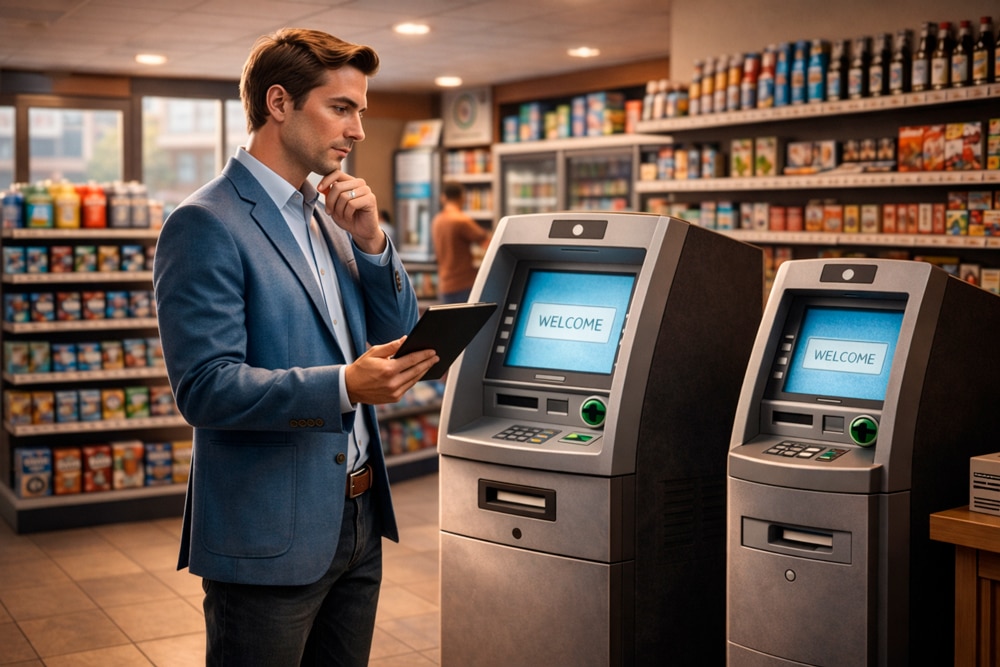
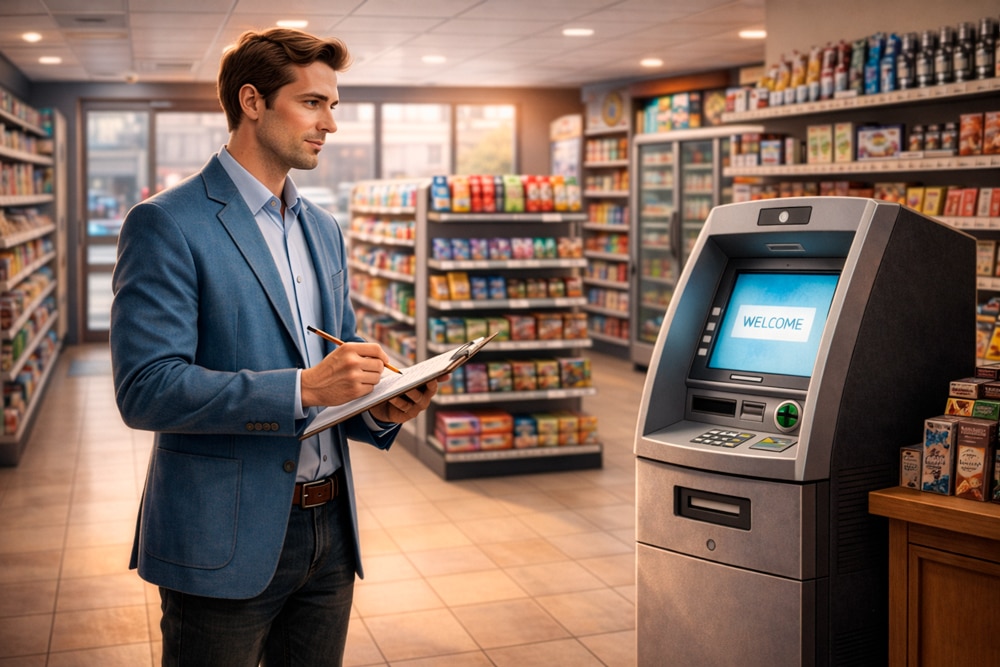
Starting an ATM business is a low-risk way for entrepreneurs to make passive income that is becoming more and more popular. This plan will place the ATMs in locations where there are a high number of customers such as gas stations, convenience stores, bars, and shopping malls.
The owner makes a surcharge fee every time a customer takes out cash. This creates a steady flow of income without the need for normal day-to-day operations. When you plan, choose the appropriate places and deal with the correct individuals, then your ATM business would be a good income provider that increases with the addition of more machines.
Step 1: Understand the ATM Business Model
If you want to start an ATM business, you need to own or run machines that give people cash and sometimes other basic banking services in public places. Owners of ATM businesses do not lend money or handle accounts like bankers do. Instead, they get paid transaction fees every time someone takes cash out of one of their machines.
The model is based on a simple idea:
- You place your ATM in locations that receive a lot of traffic and require cash such as gas stations, convenient stores, bars, restaurants, entertainment centers, or event grounds.
- Customers pay an extra fee (usually between $2.50 and $4.00 in the U.S.) every time they use your ATM to get cash. After processing, that fee is put into your business account.
- In addition to surcharge fees, owners can sometimes also get exchange fees paid by banks that issue credit or debit cards. This means that each transaction brings in more money.
This setup allows passive income, which means you make money “naturally” as long as people use the machines. This is possible because the machines run 24 hours a day, seven days a week with little to no supervision.
Step 2: Figure Out Your Startup Costs
You need to know exactly how much money you will need to start your ATM business and where that money will go before you start. The costs to open an ATM business can vary a lot based on your plan, the number of machines you want to open, and how you set up your business.
Equipment Costs:
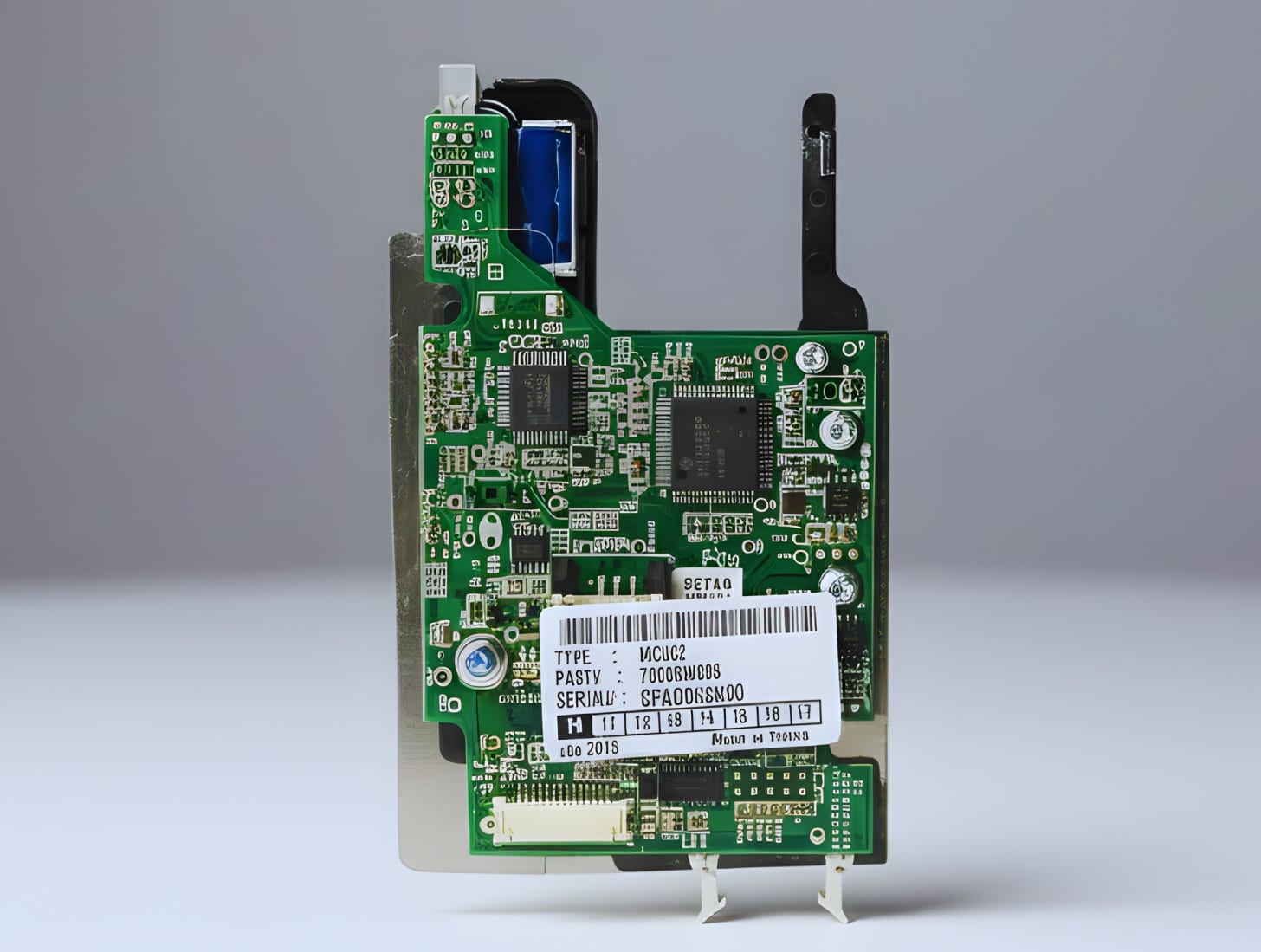
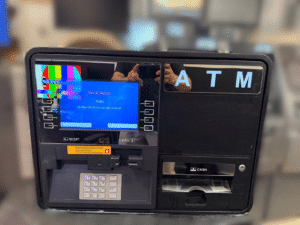
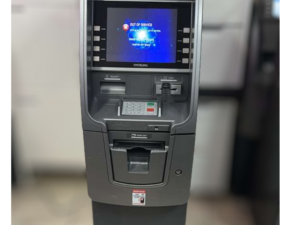
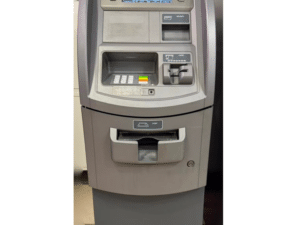
The ATM machine itself is the biggest up-front cost. New ATMs that stand alone usually cost between $2,000 and $3,000. More advanced models or units that go through the wall can cost $4,000 to $8,000 or more, based on their size and features. Used or refurbished machines are less expensive, usually between $1,600 and $1,800. But before you buy one, make sure it meets the latest security standards.
Vault Cash:
You will also need to put vault cash in the ATM before you can give it to customers. This is your working capital. Depending on where it is located and how much demand there is, this usually costs $2,000 to $5,000 per machine.
Other Startup Costs:
You will need to pay around $200 to $500 for business registration and permits, as well as $300 to $700 a year for insurance and installation and programs. A lot of operators also spend money on marketing and location agreements.
Ongoing Operational Costs:
After launching your ATM, you will incur ongoing operational costs, including cash replenishment, internet or wireless access, processing fees, and occasional maintenance or repairs. Making a budget for these ongoing costs will help your business stay profitable without any shocks.
Step 3: Register Your Business
You need to make your ATM business official before you open for business. Your little ATM operation does not technically require a company, but most entrepreneurs prefer an LLC to shield their personal assets from business disputes or mortgages. An LLC also gives you more credibility with banks, ATMs, and location partners, and compared to a sole proprietorship, it gives you more tax choices.
Pick a type of business (LLC, corporation, etc.) and file the right paperwork with the Secretary of State in your state. For example, for an LLC, you would file Articles of Organization. On top of that, you will need an EIN (Employer Identification Number) from the IRS to start business accounts and file taxes, as well as a registered agent to get documents from the government.
Step 4: Set Up Your Business Bank Accounts
After formally registering your ATM business, the next important thing you need to do is open a business bank account. Keeping your personal and business accounts separate makes it easier to keep track of extra income, vault cash, and accounting and tax filing. You should never mix personal and business funds because it makes bookkeeping difficult and can lead to legal and tax problems.
When picking a bank, look for one that knows how to work with companies that use a lot of cash and is willing to handle large deposits and withdrawals of cash. When it comes to ATM businesses, smaller regional or community banks usually have more flexible rules than big national banks, which sometimes see ATM companies as more risky.
To start the account, you will usually need your EIN, proof that you have a business (like your LLC paperwork), and a valid ID.
Step 5: Set Up ATM Processing
An ATM processing company will connect your machines with the banking networks prompting the customers to purchase with debit and ATM cards when your ATM has been established. The processor approves all cash withdrawals and makes sure that the surcharge and transfer fee money goes into your business account. Picking the right processor has a direct effect on how well your business runs and how much money you make.
It is important for an ATM processor to have clear fees, strong network support, automatic reporting, and helpful customer service. For quick resolution of problems, look for one that works with all major card networks (Visa, Mastercard, STAR, etc.) and offers technical help 24 hours a day, seven days a week. Some processors also give you real-time displays with reports and alerts when a machine is offline or low on cash, which makes it easier to keep track of machines.
When looking at ATM systems, you should compare:
- Transaction fees and the structure of fees, lower costs mean more earnings.
- Service includes help with setup, tracking, and automatic payouts.
- Reliability and support, ideally support is available 24 hours a day, seven days a week.
Euronet, NCR Atleos and specialist process partners who integrate equipment, processing, and support are familiar corporations in the United States.
Step 6: Find the Best Locations
Choosing the correct ATM location is crucial for frequent transactions and earnings. Position your ATM where people require cash and there is heavy foot traffic to boost withdrawals. The income generated from surcharges is likely to be higher where the demand is consistent and there is less competition.
Top Profitable ATM Locations
- High traffic retail areas: Shopping areas with a lot of foot traffic, like grocery stores, malls, and supermarkets, are popular with regular shoppers who may need cash for small purchases.
- Convenience & gas stations: People stop and buy things on the spot a lot, which makes these places great for ATMs.
- Bars, nightlife venues & hotels: People often prefer cash for tips, cover charges, and quick purchases in these places.
- Special events and entertainment: People need cash quickly at concerts, festivals, and sports centers.
- Niche markets: People also use cash extensively at casinos, marijuana stores, and busy parking lots.
In order to ensure that there is a demand for an ATM, one has to observe the trend of foot traffic as well as cash demand while looking for a location.
Negotiating with Location Owners
Approach business owners with a clear value proposition: your ATM makes things easier for their users and could help them make more money. Offer choices like a placement fee or a revenue share (splitting surcharge fees) so that the partnership works out well for everyone. An easy placement agreement should be prepared before finalizing with obligations, income sharing, machine maintenance and time span and to avoid any disputes and differences.
Step 7: Choose and Install Your ATM
If you select and install your ATM correctly, it will function well, be of high industry standards, and begin generating money immediately. As technology and laws continue to evolve in 2025 and 2026, it is essential to select ATMs that are safe, user-friendly, and durable.
Selecting the Right ATM Machine
- New vs. Refurbished: New machines usually cost between $2,000 and $8,000 more, but they come with all the latest features, better EMV security, and full manufacturer warranties. It is cheaper to buy used machines, but make sure they meet the latest safety standards and come with support.
- Key Features to Consider: Models should have EMV chip compliance, ADA accessibility, reliable technology, enough space in the cash cassette, and user interfaces that are easy to use. Hyosung, Genmega, and Triton are some well-known brands.
- Connection Options: Choose whether your computer will use a regular or wireless modem to connect to the internet and approve and report transactions. Connectivity that works well cuts down on downtime and lost income.
Installing the ATM
- Get the Site Ready: Make sure there is a 110V or 115V power outlet and a stable internet link (wired or wireless). Having space in front of the machine will assist the customers to access that machine; this complies with the ADA regulations.
- Physical Security: Secure the machine physically by securing it tightly and putting it in a well-lit, visible spot where people can easily get to it.
Professional Setup and Testing
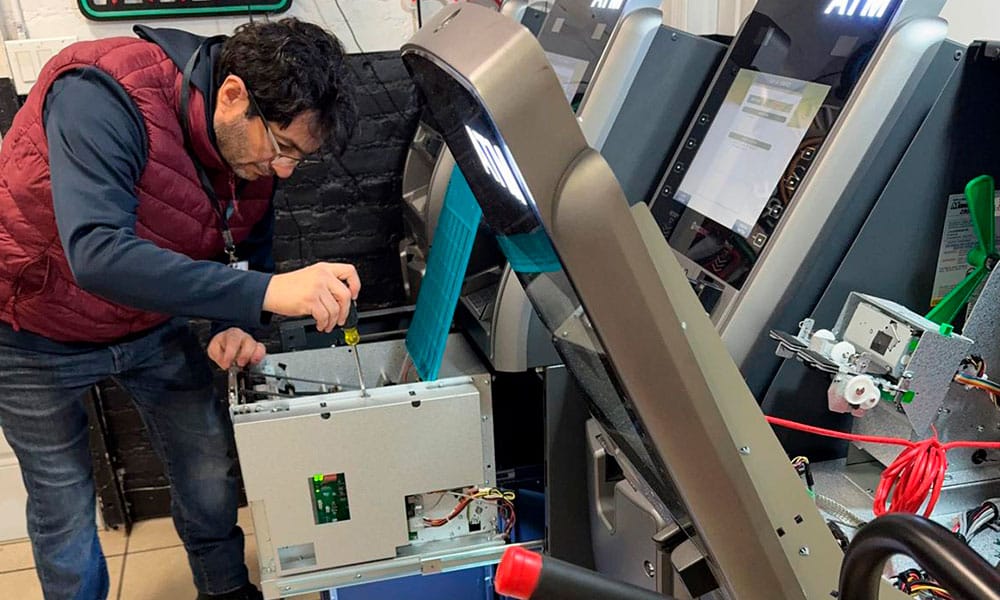
Get a professional to install the ATM with your processor to be able to access the banking networks. Once installed, also ensure that cash dispensing, connectivity and reporting works well by performing a test activity.
Quick Start Checklist
Check this fast checklist to make sure you have done everything you need to start your ATM business:
- Learn the ATM industry: Processing fees, cash demand, and surcharge fees are things that you should know before you make a purchase.
- Plan your initial investment: Make a budget for starting costs and decide whether you want to buy new or used machines.
- Register your business: Get an EIN and set up an LLC or some other legal organization.
- Get a business bank account: Keep your personal and work income and expenses separate.
- Set up ATM processing: Work with a server to connect machines to bank networks.
- Find locations: Go to places with a lot of foot traffic where people need cash.
- Install your ATMs: Make sure they work by installing and testing the machines.
If you follow these steps, you will be ready to start making money instantly and run your business easily.